Have smoky bacon crisps been banned?
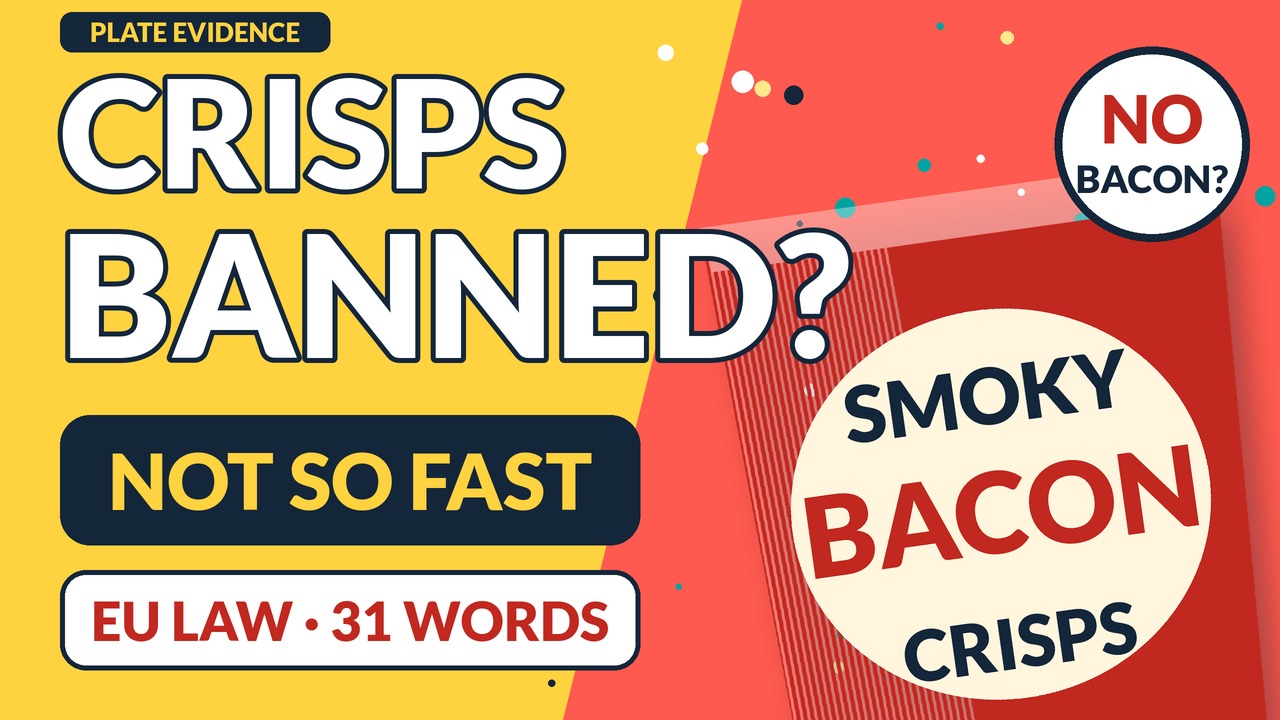
On 4 November a national newspaper said smoky bacon crisps faced a ban. Other outlets worried about roast chicken and steak flavours too. The BBC was more careful: such crisps could have to be relabelled, and much remained unclear. A ban and a relabel are two very different verbs. One takes the crisps off the shelf. The other asks the packet to change its name tag. The crisps contain no bacon, the law has not started, and nobody has banned anything. Other than that, the headline was accurate.
What does the EU law actually say?
The legal text is Regulation (EU) 2026/1739: adopted 8 July 2026, published in the Official Journal on 29 July, in force since 18 August. Mostly it is a law about farmers’ position in the food supply chain. The meat words are one small section, inserted as a new Part Ia of Annex VII to Regulation (EU) No 1308/2013.
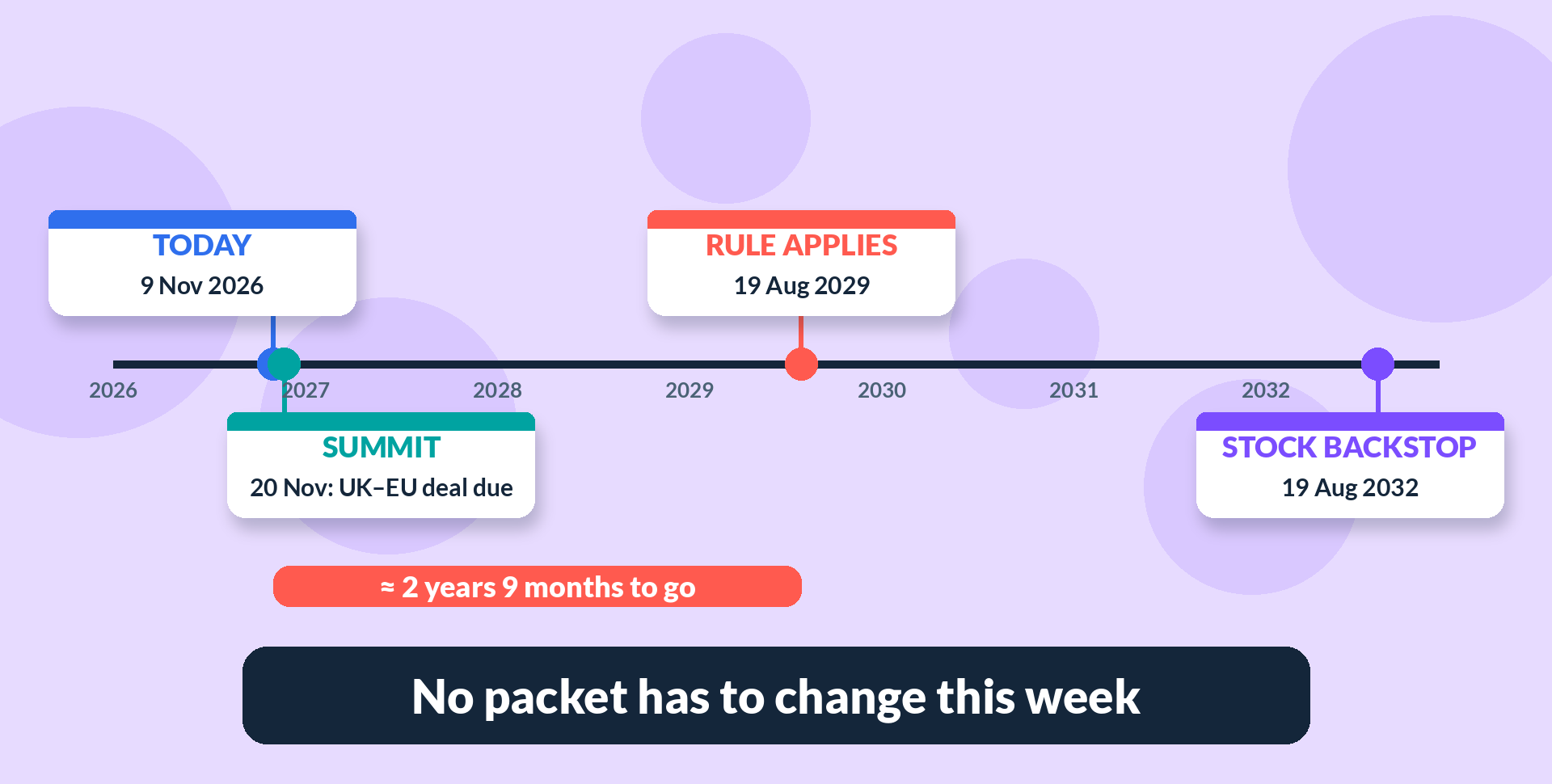
Those meat words apply from 19 August 2029. Products made or imported before then may be sold until stocks run out, or 19 August 2032, whichever comes first. The EU rule itself is nearly three years away. A reserved word is less like a locked door and more like a parking bay reserved for permit holders: the car park is still open, but that sign is not for everyone.
| Date | What happened or happens |
|---|---|
| 8 Oct 2025 | European Parliament votes for a wider proposal that would also have reserved terms such as “burger” and “sausage”. |
| 5 Mar 2026 | Provisional deal drops those two words. |
| 8 Jul 2026 | Regulation (EU) 2026/1739 adopted. |
| 29 Jul 2026 | Published in the Official Journal. |
| 18 Aug 2026 | Enters into force. |
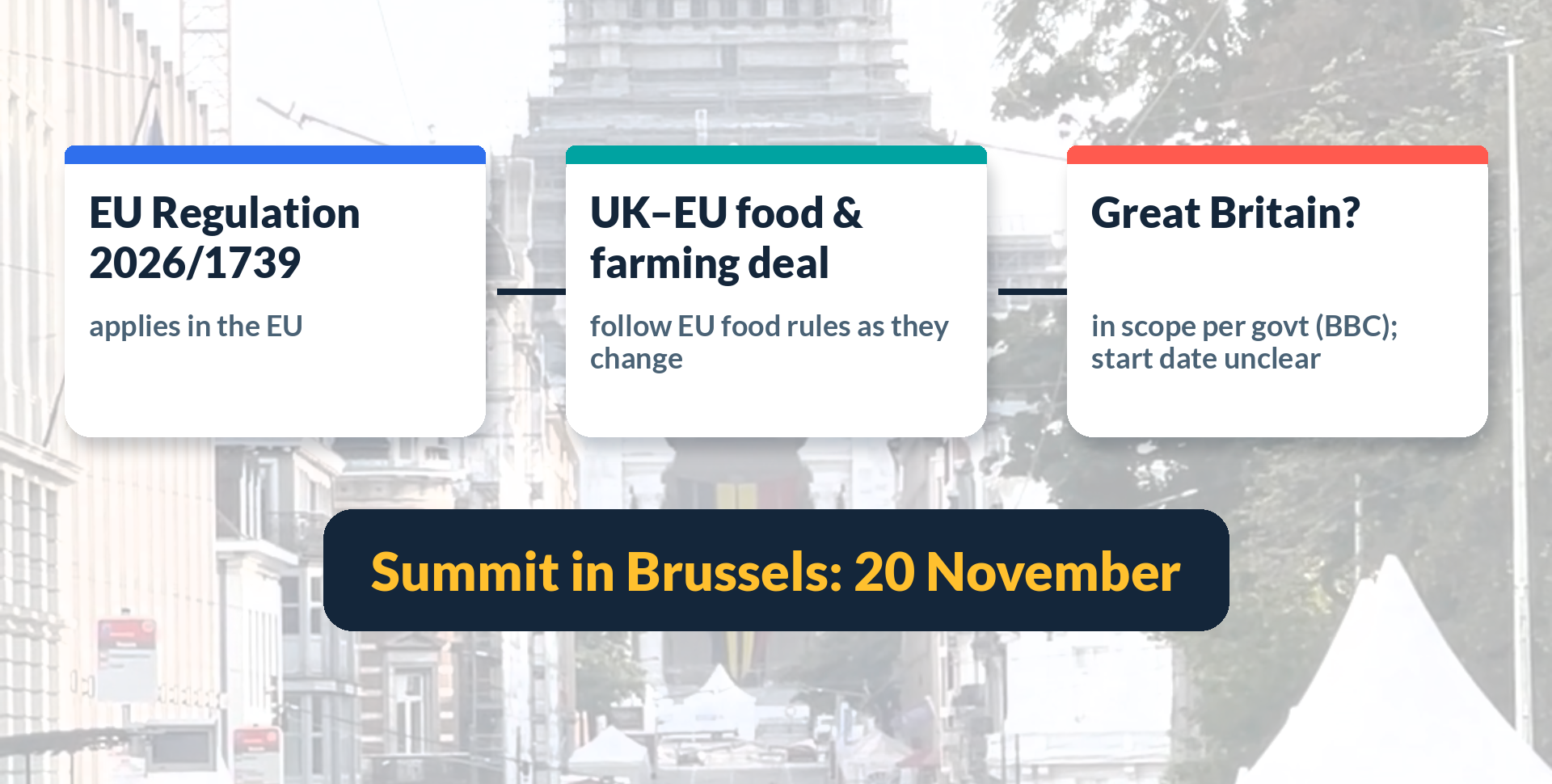
| 20 Nov 2026 | UK–EU summit in Brussels, where a food and farming agreement is expected to be signed (as reported). |
| 19 Aug 2029 | Meat-name rules apply in the EU. |
| 19 Aug 2032 | Backstop date for selling pre-existing stock. |
Which words are reserved — and which are not?
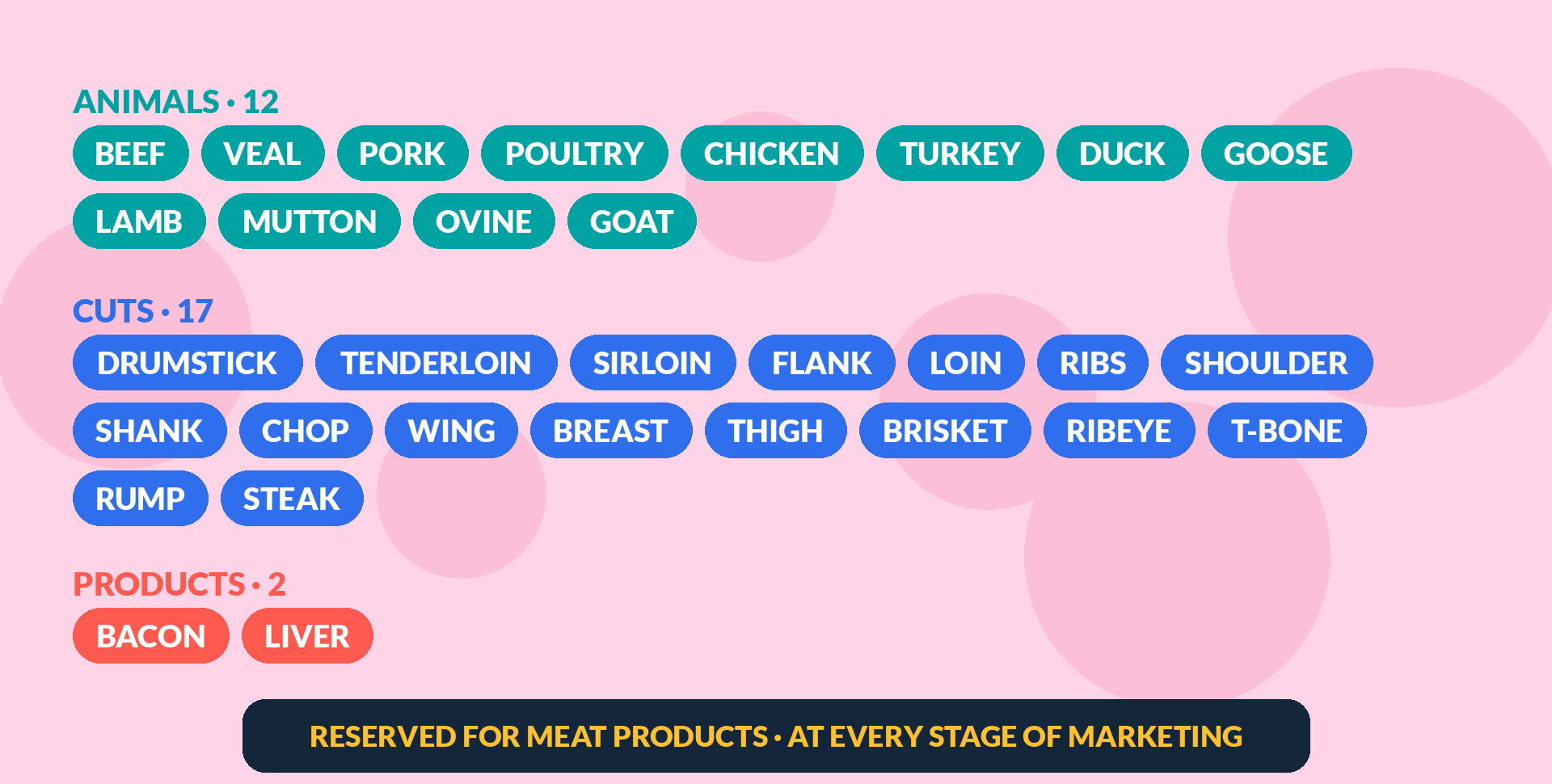
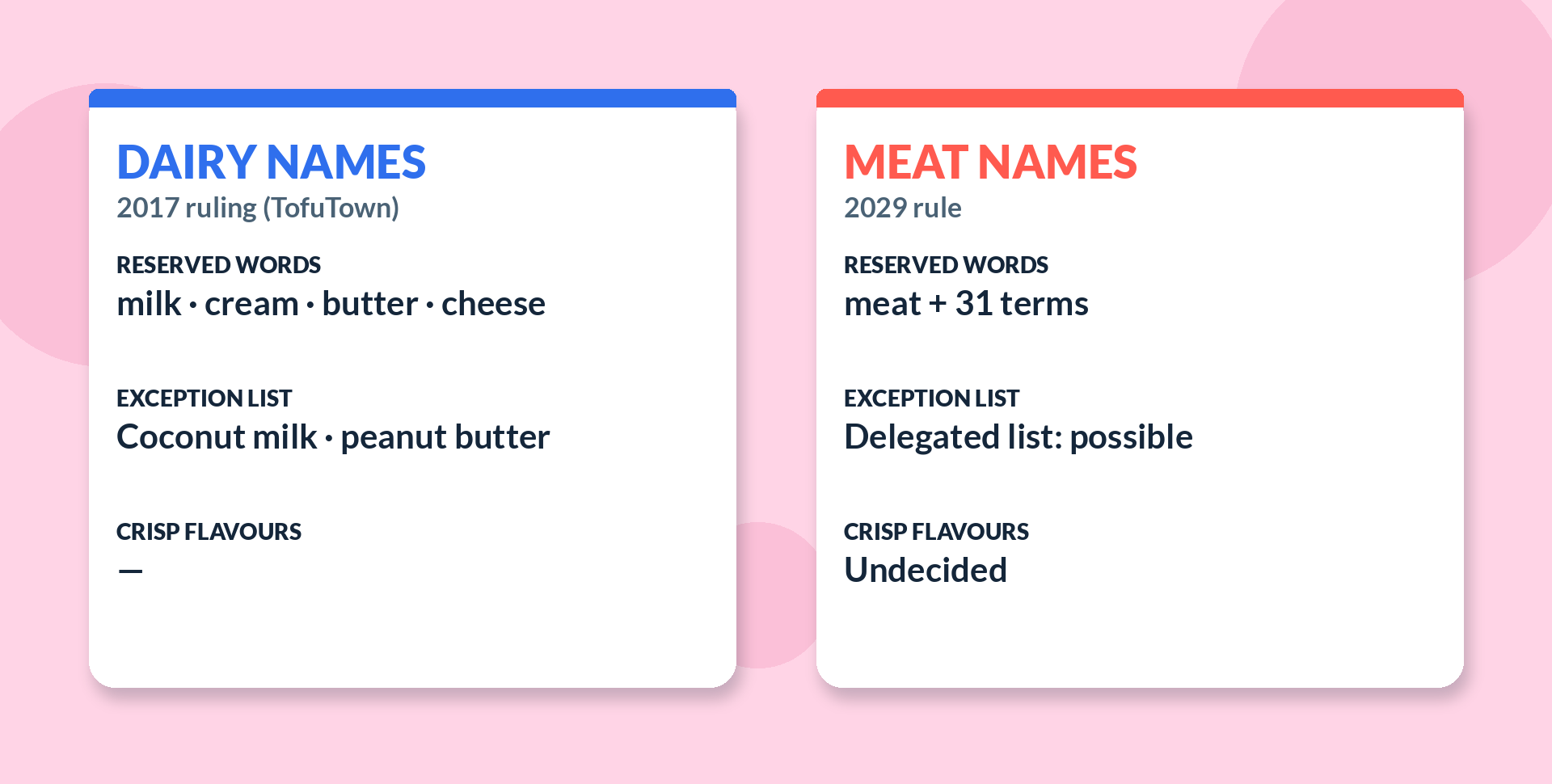
The rule reserves “meat” and 31 listed terms, “at all stages of marketing”, for meat products: twelve animals, seventeen cuts and two products.
| Group | Terms |
|---|---|
| Animals (12) | beef, veal, pork, poultry, chicken, turkey, duck, goose, lamb, mutton, ovine, goat |
| Cuts (17) | drumstick, tenderloin, sirloin, flank, loin, ribs, shoulder, shank, chop, wing, breast, thigh, brisket, ribeye, T-bone, rump, steak |
| Products (2) | bacon, liver |
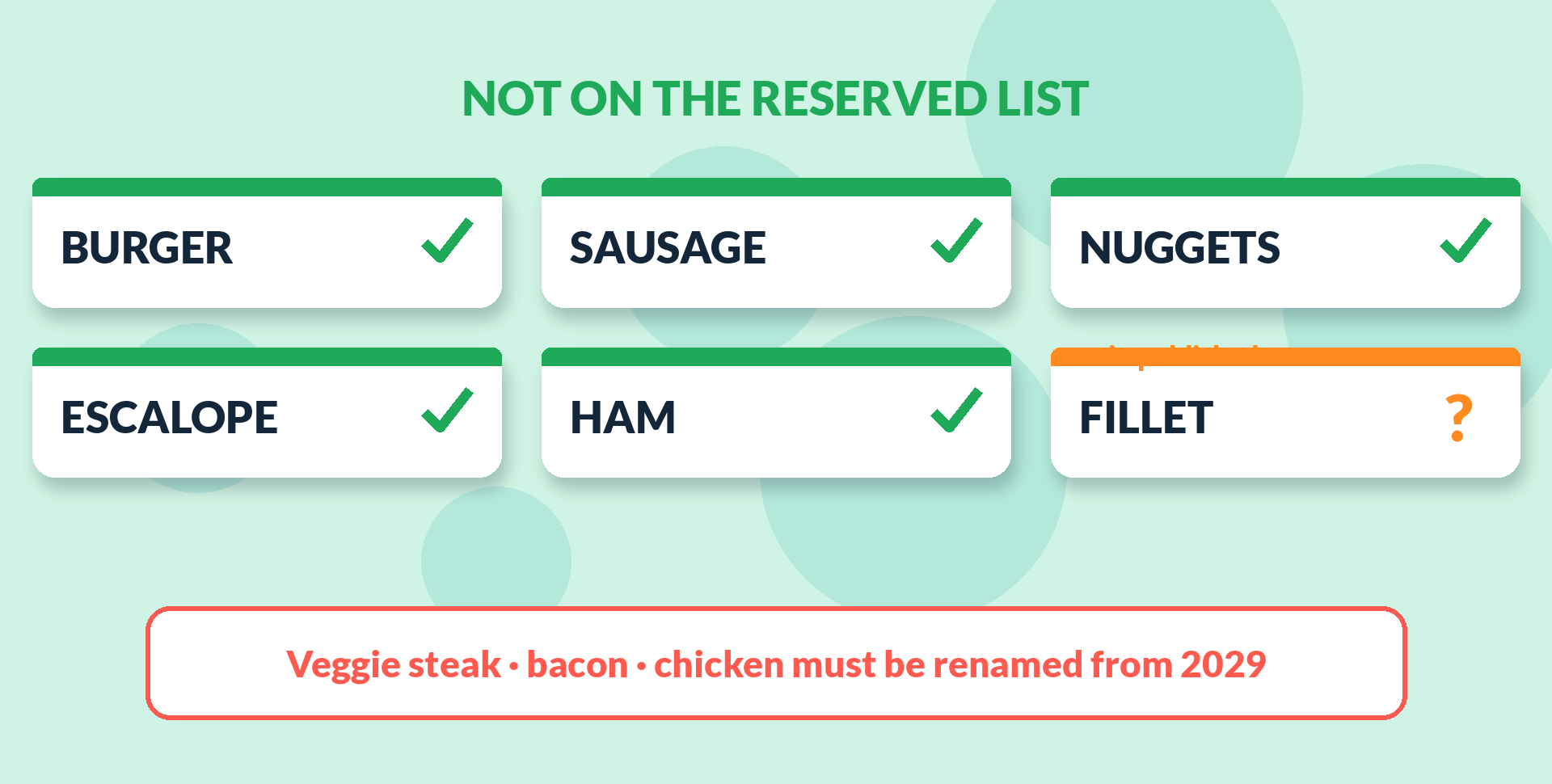
Burger, hamburger, sausage, nuggets, escalope and ham are not on the final list. Some UK reports also described “fillet” as banned; it is not in the published list we read. The earlier wider proposal would have reserved burger and sausage; the March deal dropped them. So the veggie burger survives. The veggie steak, bacon and chicken will need new names from 2029.
How is the rule built, and where do crisps come in?
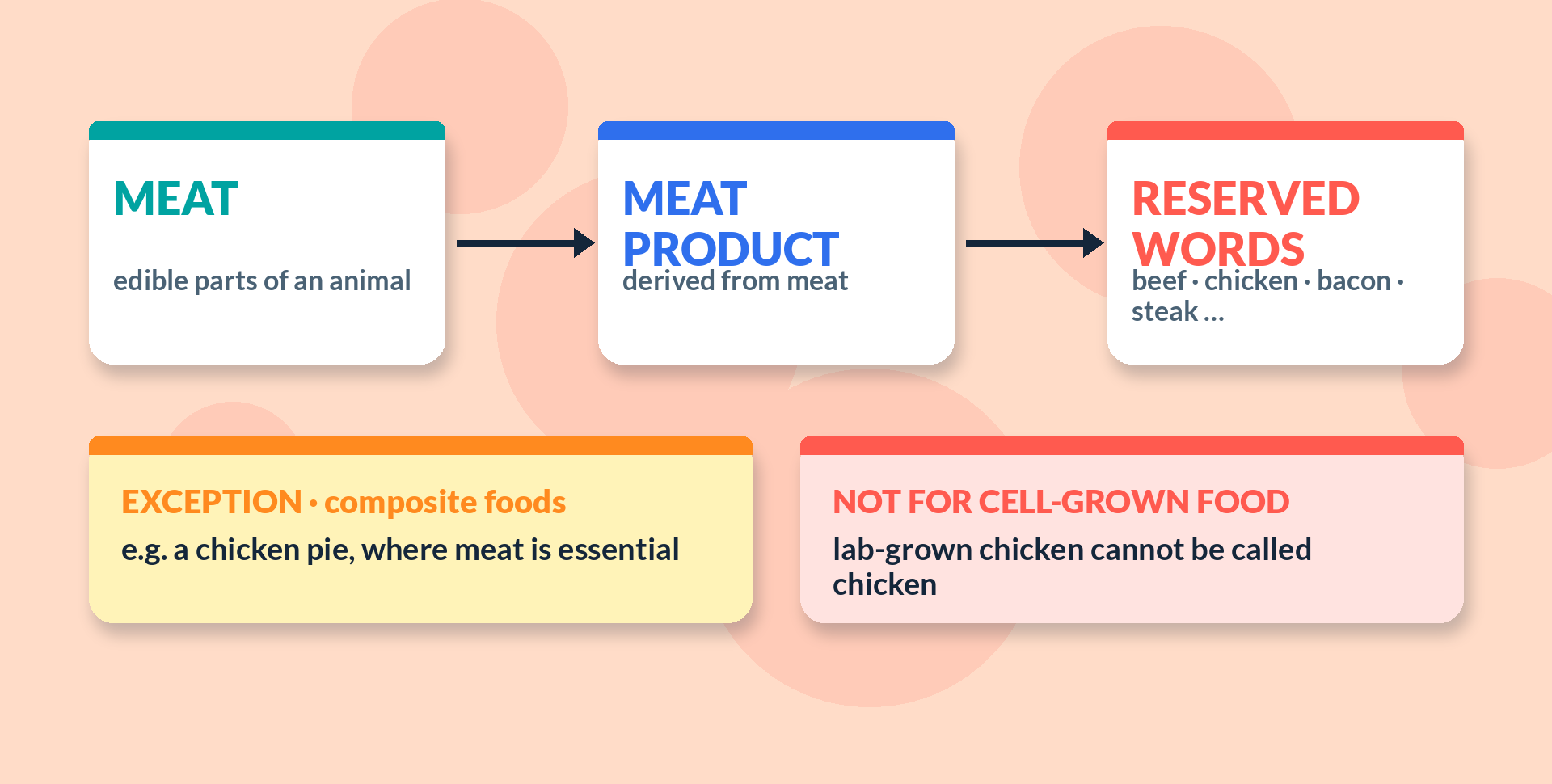
Meat means the edible parts of an animal. A meat product is derived from meat. The reserved words may name meat products, or products whose name also states the animal they come from. There is room for a chicken pie, where meat is an essential part. The words also cannot name food produced from cell culture, so lab-grown chicken cannot be called chicken either.
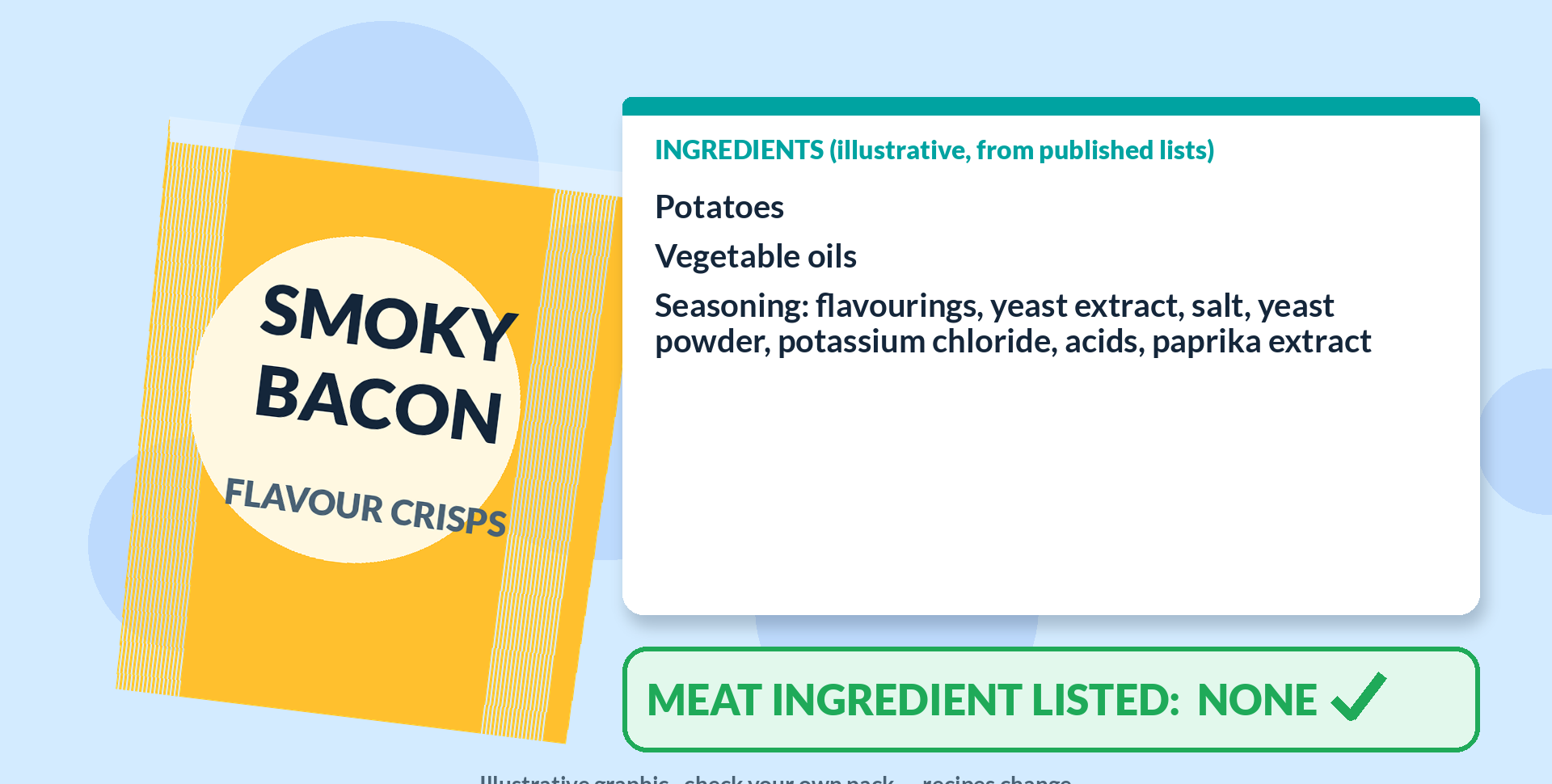
Take a published ingredient list for a major smoky bacon brand: potatoes, vegetable oils, and a seasoning of flavourings, yeast extract, salt, yeast powder, potassium chloride, acids and paprika extract. No bacon. No meat of any kind. Check your own pack, because recipes change, but a bacon flavour is typically made without bacon. It is a little like a “woodland” candle that smells of pine and contains no woodland.
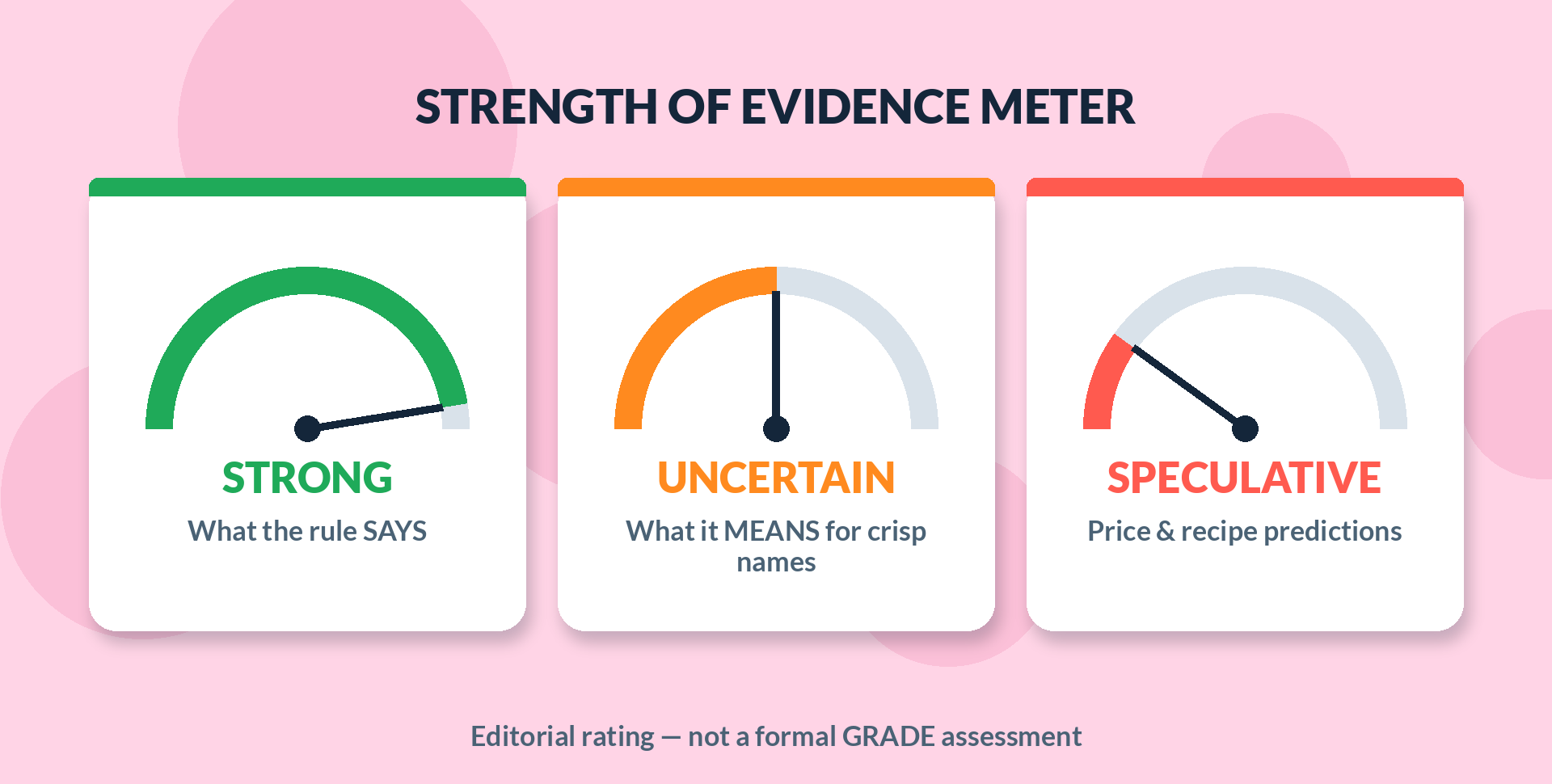
The regulation reserves “bacon” for meat products. It applies to food generally, not only to veggie burgers, and the text has no specific exception for flavour descriptions. That is why crisp makers noticed: the European Snacks Association has warned that meaty flavour names may be caught “inadvertently”, as reported by FoodNavigator. Whether they are caught has not been settled.
Could there still be a way out?
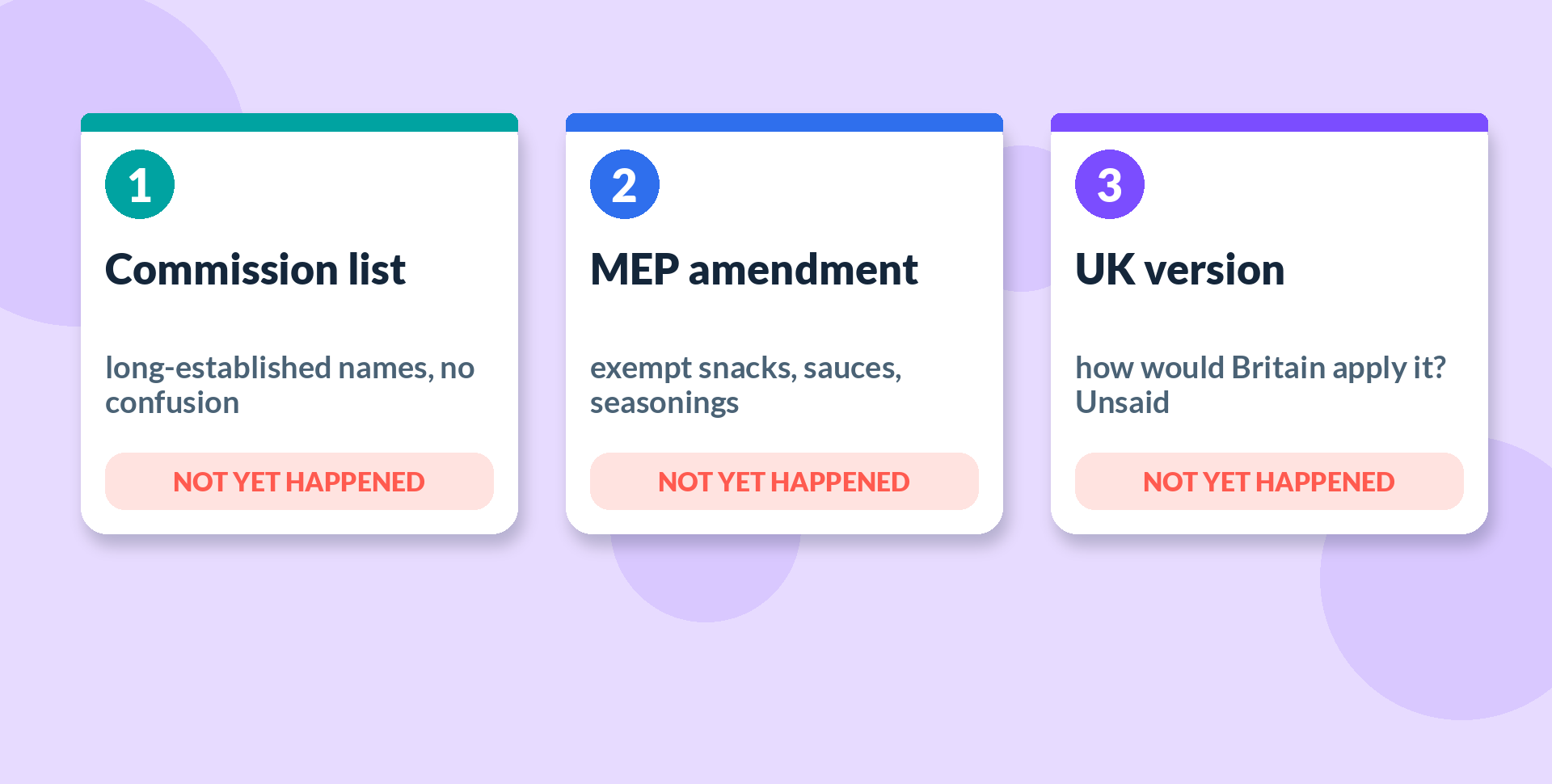
None of these routes has been completed. The Commission may adopt a delegated list of long-established names whose exact nature is clear and causes no confusion. Centre-right MEPs have proposed, in separate legislation, exempting snacks, sauces and seasonings — a proposal, not law. And nobody has said how a British rule would treat crisp flavours.
Is there a precedent, and does this apply in Britain?
In the 2017 TofuTown case (C-422/16), the EU’s top court ruled that plant-based products cannot be sold under milk, cream, butter or cheese names. Yet the Commission keeps a list of exceptions that includes coconut milk and peanut butter — a guest list for names everybody understands. Whether crisp flavours would qualify has not been decided.
France adopted national decrees banning veggie products from using meat names. In October 2024 the EU court ruled (C-438/23, Protéines France) that a Member State cannot ban customary or descriptive names by general rule under the existing labelling rules. The decrees were annulled by the Conseil d’État in January 2025. A binding rule had to come from Brussels. Which is exactly what happened.
The EU regulation does not apply in Great Britain. The UK and the EU have been negotiating a food and farming (sanitary and phytosanitary) agreement — animal and plant health rules for the food trade — under which Britain would follow many EU food rules as they change. A 20 November summit in Brussels is expected to sign it. According to the BBC, the government expects the meat rules to be in scope; how and when is unclear.
The Potato Processors’ Association wants to avoid unintended consequences for names shoppers understand as flavours. The Food and Drink Federation points out that the meat rules were written before the arrangement existed and the UK was not involved (both as summarised from the BBC report by trade press). A fair point about process. Not yet an answer about crisps.
What should you believe — and what can you check today?
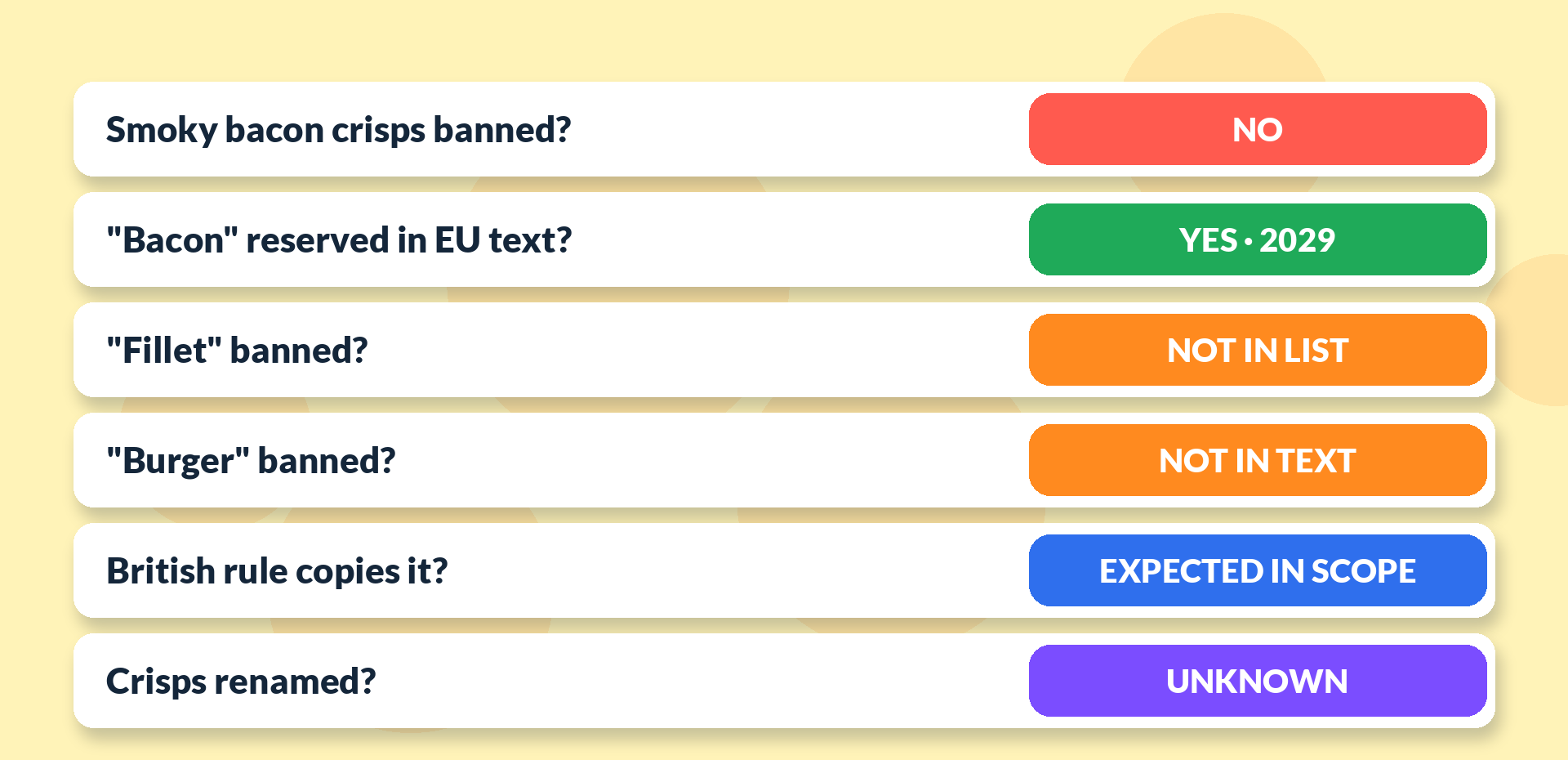
| Claim | Verdict |
|---|---|
| Smoky bacon crisps are banned | NO |
| “Bacon” is reserved in the EU text | YES, from 19 Aug 2029 |
| “Fillet” is banned | Not in the published list |
| “Burger” is banned | Not in the final text |
| Britain will copy the rule | Expected in scope (BBC); unclear how |
| Your crisps will be renamed | Nobody knows |
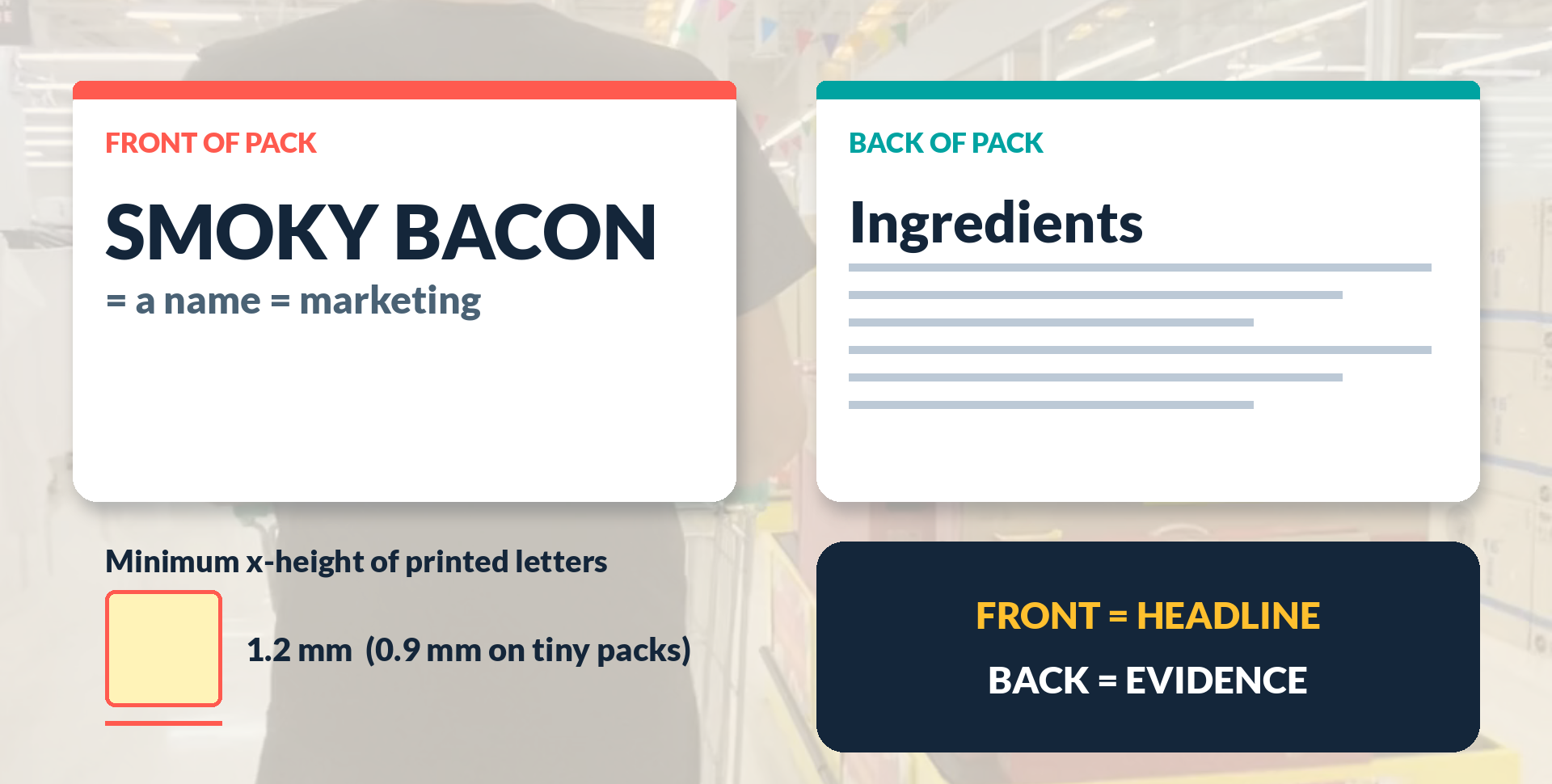
A name is marketing. The ingredient list is the law at work. In the UK, mandatory information must be clearly legible, with a minimum x-height of 1.2 mm, or 0.9 mm on very small packs (GOV.UK, from Regulation 1169/2011). If the front says bacon, look in the ingredients for actual bacon. The front of the pack is a headline; the back is the evidence.
The verdict
Smoky bacon crisps have not been banned. A word has been reserved in the EU from 2029. Whether that word survives on a crisp packet depends on a Commission list, a European Parliament vote and a British decision. The sensible reaction is not panic. It is reading the ingredients and watching 20 November. This is public information explained, not legal advice.
Questions from the label desk
Have smoky bacon crisps been banned?
No. Regulation (EU) 2026/1739 reserves “bacon” and 31 other meat terms for meat products from 19 August 2029. It does not mention crisps, and whether flavour names are caught has not been decided.
Does the EU rule apply in the UK?
Not directly. Great Britain is outside the EU. Under a planned UK–EU food and farming agreement the UK would follow many EU food rules as they change, and the government has said it expects the meat rules to be in scope, according to the BBC. The timing and detail are unclear.
Which words are reserved?
“Meat” plus 31 terms: 12 animal names, 17 cut names and two products, bacon and liver. Burger, sausage, nuggets, escalope and ham are not on the list.
Do smoky bacon crisps contain bacon?
The published ingredient lists we checked for a major brand list no meat; the flavour comes from seasoning. Recipes change, so check your own packet.
When does the rule start?
19 August 2029, with stock made or imported before then allowed on sale until stocks run out or 19 August 2032, whichever comes first.
Is this legal advice?
No. It is public information explained. Read the primary sources below.
Watch the Plate Evidence film
The matching film is now available on @PlateEvidence. The written investigation, primary sources and caveats stand on their own.
Visit @PlateEvidence on YouTube ↗Primary sources and further reading
- Regulation (EU) 2026/1739 — EUR-Lex (Official Journal, 29 July 2026): Article 1(13), Annex VII Part Ia to Regulation 1308/2013; Articles 4 and 5 for dates and stock.
- Regulation (EU) No 1308/2013 — common organisation of the markets.
- CJEU C-422/16, TofuTown (14 June 2017).
- CJEU C-438/23, Protéines France (4 October 2024).
- GOV.UK: Packaging and labelling — minimum x-height for mandatory information.
- FoodNavigator, 27 October 2026 — European Snacks Association warning and EPP amendment (search the site for “meaty flavour names”).
- Press coverage attributed in the text: The Telegraph, 4 November 2026; BBC News, 6 November 2026 (as summarised by trade press).
Corrections welcome. EUR-Lex was not directly retrievable from our research machine on 9 November 2026; the Part Ia list and dates were read from the Official Journal extract and cross-checked against three independent legal write-ups. If you spot a discrepancy, tell us and we will correct this page.